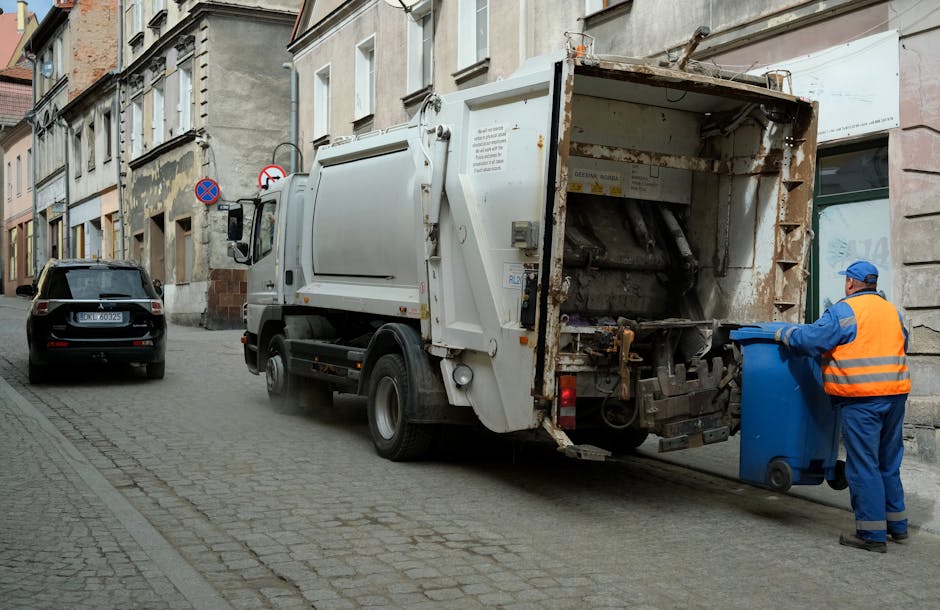
Uxbridge Road rubbish collection alternative for flats Shepherds Bush
If you live in a flat near Uxbridge Road, you already know the awkward part of getting rid of rubbish: the bags build up, the lift is small, the bin store is full, and the timing never quite lines up with normal collection days. That is exactly why people look for a Uxbridge Road rubbish collection alternative for flats Shepherds Bush rather than trying to wrestle with overflowing sacks on their own. In practice, the best alternative is usually a flexible, door-to-door waste removal or flat clearance service that can handle awkward access, mixed loads, and fast turnarounds without turning your hallway into a staging area.
This guide explains what that alternative looks like, how it works, who it suits, and what to watch out for. If you want a cleaner, simpler way to clear rubbish from a flat without hassle, you are in the right place.
Quick expert summary: For flats on or around Uxbridge Road, the most practical rubbish collection alternative is usually a pre-booked, assisted collection that removes waste from inside the property, manages stairs or lifts sensibly, and prioritises proper sorting and recycling. It is especially useful when council-style collections are too rigid, too slow, or just not designed for your building layout.
Table of Contents
- Why Uxbridge Road rubbish collection alternative for flats Shepherds Bush Matters
- How Uxbridge Road rubbish collection alternative for flats Shepherds Bush Works
- Key Benefits and Practical Advantages
- Who This Is For and When It Makes Sense
- Step-by-Step Guidance
- Expert Tips for Better Results
- Common Mistakes to Avoid
- Tools, Resources and Recommendations
- Law, Compliance, Standards, or Best Practice
- Options, Methods, or Comparison Table
- Case Study or Real-World Example
- Practical Checklist
- Conclusion
- Frequently Asked Questions
Why Uxbridge Road rubbish collection alternative for flats Shepherds Bush Matters
Uxbridge Road is a busy stretch, and the surrounding flat blocks, conversions, mansion flats, and mixed-use buildings all create the same familiar problem: waste does not always fit the rhythm of standard collection systems. If your rubbish is simple, neatly bagged, and ready on the kerb at the right time, fine. But flats are rarely that tidy in real life. Someone misses collection day. A sofa will not fit in the lift. A landlord wants a rapid turnaround before new tenants move in. Or a broken wardrobe ends up leaning against a wall for far too long. You know the scene.
That is where an alternative rubbish collection model becomes valuable. Rather than relying only on a fixed bin-lorry-style collection, you can book a service that collects waste directly from the flat, the hallway, the basement store, or wherever access makes sense. For many Shepherds Bush residents, that removes the two biggest headaches: the logistics of moving waste and the uncertainty of when it will actually disappear.
There is another reason it matters. Waste left in shared spaces tends to become everyone's problem. One bag becomes two. Then it smells a bit. Then someone adds a box that should not be there. By the weekend the bin area looks, frankly, grim. A proper flat rubbish collection alternative helps stop that snowball effect before it starts.
If your waste is more than a couple of bags, or if you are dealing with bulky items, you may find it easier to use a dedicated waste removal service rather than trying to make everything fit a communal system that was never built for larger clear-outs.
How Uxbridge Road rubbish collection alternative for flats Shepherds Bush Works
In simple terms, it works by replacing rigid collection timing with a booked collection window. You tell the provider what needs removing, how much there is, and what access is like. They then plan the job around your building and the load itself. No mystery. No waiting around for a council round that may or may not line up with your schedule.
For flats, the process usually looks something like this:
- Share the basics. Explain what needs collecting, whether it is bagged rubbish, mixed household waste, furniture, loft clutter, or builders' debris.
- Describe access. Mention floors, lifts, narrow staircases, parking restrictions, or any entry codes. A tiny detail here can save a lot of faff later.
- Get a clear quote. A proper quote should reflect volume, weight, item type, access difficulty, and disposal requirements.
- Book a time slot. Good services try to work around building routines, residents, and loading restrictions where possible.
- Collection happens on site. In many cases the team will remove waste from inside the flat or from a nearby agreed point, which is a huge relief when you are juggling keys, bins, and neighbours coming and going.
- Sorting and disposal. Reputable operators separate recyclable, reusable, and residual waste where practical rather than just throwing everything into one pile. That part matters more than people think.
The best part is how ordinary it feels once it is done. Bags that were taking up half a kitchen suddenly vanish. The corridor breathes again. You can hear your own shoes on the floor, which sounds dramatic, but if you live in a small flat, space is emotional.
Some people prefer flat clearance when there are larger items or a full room to empty. Others just need a lighter-touch rubbish collection. If you are clearing more than waste alone, it may be worth looking at flat clearance or even a broader home clearance approach if the property has become cluttered over time.
Key Benefits and Practical Advantages
The main advantage is convenience, but there is a bit more to it than that. A good alternative collection service can solve several problems at once.
- Less lifting and carrying. You do not need to drag heavy bags down several flights of stairs.
- Better for awkward buildings. Older Shepherds Bush flats often have tight stairwells, small lifts, and tricky access points.
- Faster than waiting for the next collection day. Useful when you need the place clear quickly.
- More flexible for mixed loads. Household rubbish, a broken chair, a flat-pack box pile, and a bag of clutter can all go together if the provider accepts that type of waste.
- Reduced strain on shared bin stores. Good for landlords, residents' associations, and managing agents.
- Clearer accountability. You know who collected what, when it happened, and where it went. That sounds basic, but it really helps.
There is also a quiet quality-of-life benefit. Nobody likes living beside a growing heap of rubbish. It changes how a flat feels. Clean-out day can feel like hitting reset. Not glamorous, perhaps, but genuinely satisfying.
For homeowners and tenants who are dealing with old chairs, worn tables, or broken storage units alongside their rubbish, a dedicated furniture disposal service may be the tidiest route. If the load is mostly bulky household items, furniture clearance can be even more practical.
Who This Is For and When It Makes Sense
This kind of collection alternative is not just for people doing a full spring clean, though that is common enough. It suits a range of real-life situations:
- Tenants moving out who need to hand back a flat without leaving rubbish behind.
- Landlords and letting agents dealing with end-of-tenancy clutter or a quick turnaround between occupants.
- Flat owners who are clearing storage cupboards, balconies, loft spaces, or a crowded hallway.
- Shared-house residents who have built up more waste than the building's bins can reasonably handle.
- People with limited mobility who cannot easily manage multiple trips up and down stairs.
- Busy professionals who simply do not have the time to wait in for irregular collection windows.
It also makes sense when rubbish is mixed with other items. A box of old paperwork, a damaged bedside table, and some bagged waste is not unusual in a flat, but it is the sort of thing that can become annoying fast if you try to solve it with a one-size-fits-all collection method.
Truth be told, if your flat has a strict building management policy or limited loading access, an alternative collection option can save you from a lot of polite but frustrating emails. And nobody needs more of those.
Step-by-Step Guidance
If you want the smoothest possible experience, it helps to approach the job methodically. Here is a simple way to do it.
- Sort your waste first. Separate rubbish, recyclables, reusable items, and anything sensitive like documents. This makes the collection quicker and cleaner.
- Check building access. Look at parking, lifts, entry codes, concierge hours, and any rules about moving waste through common areas.
- Estimate the volume honestly. A quick mental guess is often wrong. If in doubt, take a photo. It is much easier to price something from a photo than from a vague "quite a lot, actually".
- Choose the right service type. For a single bulky item, furniture disposal may be enough. For several rooms or mixed waste, a broader waste removal solution is usually better.
- Book a sensible time. Mid-morning or early afternoon can be easier in busy residential blocks, but it depends on your building and neighbours.
- Keep the route clear. Stairs, hallways, and doors should be accessible. It speeds things up and reduces risk.
- Confirm what is included. Make sure you know whether loading, labour, disposal, and recycling are all covered in the price.
- Ask about next steps. If the job uncovers more waste than expected, check how changes will be handled before collection day.
A small planning tip: keep a separate pile for anything you might want to donate, store, or sell later. Once the collection team starts moving, things can get mixed up surprisingly quickly. You do not want to accidentally wave goodbye to the good desk lamp.
Expert Tips for Better Results
After plenty of flat collections, a few habits make a big difference.
- Photograph the waste before booking. It helps with pricing and avoids awkward surprises.
- Be specific about access. "Second floor, no lift, narrow stairwell, parking bay unavailable" is much more useful than "easy access".
- Label anything that should stay. If you are clearing a flat in stages, mark keep items clearly so they do not get moved by mistake.
- Think about noise and timing. Early evening collections can be awkward in residential blocks. Sometimes a quieter slot is kinder to everyone.
- Use a provider that discusses recycling. Even for simple rubbish, better sorting usually means less going to landfill.
- Book before the deadline, not after it. If you are leaving a tenancy or completing a sale, give yourself breathing room. The final 24 hours always go faster than planned.
One more small thing: if your flat has bulky items with no easy lift access, tell the provider before they arrive. It is not being fussy. It is helping them do the job properly, and it keeps the whole process calmer.
If the clear-out is bigger than a few bags, you may benefit from a structured house clearance style approach even in a flat setting, especially where multiple rooms are involved. It sounds grander than it is. Mostly, it just means the work is organised better.
Common Mistakes to Avoid
Most problems are avoidable, which is the good news. The less good news is that the same mistakes keep happening.
- Underestimating the amount of waste. A couple of extra bags can change the job materially.
- Ignoring access restrictions. Parking and stair access can be the deciding factor in whether a collection is smooth or mildly chaotic.
- Leaving everything to the last minute. This is the big one. It turns a manageable task into a panic job.
- Mixing prohibited or hazardous items with ordinary rubbish. Always check what can be accepted.
- Choosing on price alone. Cheaper is not always better if it means poor communication or unclear disposal practices.
- Forgetting to ask what happens after collection. Reassurance matters. You want to know waste will be handled properly.
Another common issue is assuming every building is the same. It is not. A modern block with a service lift behaves very differently from a converted Victorian terrace where the stairs turn sharply and the door barely stays open. Small thing, big impact.
Tools, Resources and Recommendations
You do not need a lot of tools, but a few simple things make flat rubbish removal much easier:
- Heavy-duty bags or boxes for sorting loose waste.
- Marker labels for keep, donate, recycle, and remove piles.
- Measuring tape if you are dealing with bulky items and want to estimate whether they will fit through doorways.
- Phone camera to document the load before booking.
- Basic gloves for sorting dusty storage areas or loft cupboards.
When deciding which service route to choose, it often helps to compare the job type against the service type. For example, if you are clearing a small pile of household waste and one broken chair, a simple collection may be enough. If you are emptying a spare room, you may need something closer to full property clearance. That is where a service like furniture clearance or loft clearance can be useful, depending on what has actually accumulated.
For people dealing with office contents, archived paperwork, or commercial overflow connected to a flat above a business, office clearance or business waste removal may be more relevant. It depends on the load, not the postcode. That is the honest answer.
Law, Compliance, Standards, or Best Practice
Waste removal in the UK is not something to be casual about. The exact duties will vary depending on the waste type, who produced it, and whether it is household or commercial in nature, but best practice is consistent: waste should be handled safely, transferred responsibly, and sent to appropriate facilities.
For flats, a few sensible principles apply:
- Do not leave waste in communal areas longer than necessary.
- Keep hazardous items separate unless the service has confirmed it can accept them.
- Use clear labelling when moving items from a flat through shared spaces.
- Choose an operator that treats disposal seriously rather than treating everything as one undifferentiated load.
- Check insurance and safety processes if the job involves stairways, tight corners, or awkward lifting.
It is also sensible to look for transparent pricing and a clear explanation of how collections are managed. That does not mean you need a lecture. Just enough clarity to know who is doing what, and what happens if the load turns out to be larger than expected. If you want to understand how a provider approaches this side of the job, the pages on insurance and safety, health and safety policy, and recycling and sustainability are worth a look.
On the trust side, practical details matter too. A provider should be clear about payment handling, expectations, and complaint routes. That sort of transparency is boring in the best possible way. It keeps things smooth.
Options, Methods, or Comparison Table
Not every flat rubbish problem needs the same solution. Here is a simple comparison to help you choose the most suitable route.
| Option | Best for | Strengths | Limitations |
|---|---|---|---|
| Regular bin collection | Small amounts of everyday waste | Simple, familiar, low effort | Rigid timing, limited capacity, poor for bulky items |
| Assisted rubbish collection | Flats with access issues or awkward loads | Flexible booking, handles stairs and lifts, quicker turnaround | Needs clear booking details and proper access info |
| Flat clearance | Rooms, cupboards, and mixed contents | Good for bigger jobs, can remove furniture and rubbish together | More involved than a basic collection |
| Furniture disposal | Single or multiple bulky household items | Efficient for large items, less manual hassle | Not ideal if you also have lots of loose waste |
| Builders waste clearance | Post-refurbishment or DIY debris | Useful for rubble, packaging, and construction offcuts | May not suit ordinary household rubbish |
In a lot of cases, the right answer is a mix. Maybe you keep your standard bin routine for weekly waste but book an alternative collection for the larger clear-out. That is not overthinking it. That is just sensible.
Case Study or Real-World Example
A typical Shepherds Bush scenario goes like this. A resident in a first-floor flat off Uxbridge Road has been slowly clearing out a spare room. At first it is just a couple of bin bags. Then an old bedside table appears. Then a broken desk. Then several boxes of mixed clutter from under the bed, which somehow always contain more than expected. By the time the room is usable again, the communal bin store is already full and there is no sensible way to shift everything down the stairs in one go.
Rather than leaving the building looking untidy for days, the resident books a collection that can deal with the lot in one visit. Access is tight, the lift is tiny, and the parking situation is not brilliant, but those details are shared in advance. The team arrives prepared, clears the waste in a single visit, and the flat feels calmer almost instantly. You can hear the echo in the room again. Not dramatic, but real.
That is the real value of a good alternative collection: it turns a stressful, piecemeal job into a finite task. One morning, one appointment, one clear result. That alone is worth a lot.
If the job has become a full property tidy-up rather than just rubbish removal, it can make sense to explore flat clearance as the broader option. If the main issue is a mix of bags and older household items, waste removal plus furniture support is often enough.
Practical Checklist
Use this before you book anything. It saves time, and a few awkward calls too.
- Have I sorted rubbish from items I want to keep?
- Have I checked whether any items are bulky, fragile, or unusually heavy?
- Have I noted floor level, lift access, and any stair restrictions?
- Have I checked parking or loading limitations near the building?
- Have I taken photos of the waste load?
- Do I know whether I need basic rubbish collection or a fuller clearance?
- Have I separated anything that may need special handling?
- Have I chosen a time that works with neighbours or building rules?
- Do I understand the quote and what it includes?
- Have I made the route from flat to exit clear and safe?
If you can tick most of those off, you are in a very good place. Not perfect. But good enough to make the day easy.
Conclusion
A Uxbridge Road rubbish collection alternative for flats Shepherds Bush is really about making waste removal fit the reality of flat living. Buildings are busy, access is often awkward, and rubbish does not politely wait for ideal timing. A flexible collection or clearance service gives you a cleaner, calmer way to deal with the mess without dragging bags through the building or hoping the bin store can somehow absorb another week of overflow.
The smartest approach is to match the service to the job: simple rubbish collection for smaller loads, flat clearance for bigger clutter, furniture disposal for bulky items, and waste removal when you need a more complete solution. Keep the access details clear, be honest about the load, and choose a provider that values safety, recycling, and transparency. That is usually the sweet spot.
If you are weighing up the next step, take a minute to compare your load against the available services, then move from there with confidence. It does not need to be complicated. In fact, the best jobs are the ones that feel almost boring once they are finished. Clean floor. Clear hall. Peace and quiet. Lovely stuff.
Get a free quote today and see how much you can save.
Frequently Asked Questions
What is the best rubbish collection alternative for flats on Uxbridge Road?
For most flats, the best alternative is a flexible waste removal or flat clearance service that collects from inside the property or from an agreed access point. It works well when standard collections are too rigid or when bulky waste makes bin use impractical.
Why not just wait for the normal rubbish collection day?
Sometimes you can, but flats often have limited bin space, access restrictions, or bulky items that will not fit in communal bins. If rubbish is piling up, waiting can create hygiene issues and inconvenience for everyone in the building.
Can a flat rubbish collection service handle stairs?
Yes, many can. That is one of the main reasons people use them. Just be clear about floor level, lift access, and any narrow turns or entry restrictions before booking.
Is flat clearance the same as rubbish removal?
Not quite. Rubbish removal usually focuses on waste, while flat clearance can include furniture, clutter, and mixed contents from one or more rooms. If you have bulky items mixed in, flat clearance may be the better fit.
What if I only have one or two bulky items?
If it is mainly one sofa, a mattress, or a broken wardrobe, furniture disposal may be more suitable than a full clearance. The right choice depends on the item type and how much general waste you also have.
How should I prepare waste before collection?
Sort it into bags or boxes where possible, keep anything you want to retain separate, and make sure access routes are clear. A quick photo before collection is also very helpful for accurate quoting.
Can this help with move-out cleaning deadlines?
Yes. This is one of the most common reasons people book an alternative collection. If you are leaving a flat, a fast turnaround can make the difference between a calm handover and a very stressful final day.
Is recycling included?
Responsible providers aim to sort recyclable and reusable materials where practical. Exact handling depends on the waste type and collection method, so it is sensible to ask how recycling is approached before the job goes ahead.
What happens if the load is bigger than I expected?
That can happen, especially with old cupboards, storage rooms, or hidden clutter. A good provider should explain how additional volume is handled and whether the quote may change if the job is larger than described.
Is this suitable for landlords and letting agents?
Absolutely. It is often the most practical option after a tenancy ends, especially when a flat needs clearing quickly between occupants and communal access needs to be kept tidy.
Do I need to know the exact weight of my rubbish?
No, not usually. A rough description, a few photos, and a clear explanation of access are often enough. Weight matters behind the scenes, but most residents are better off thinking in terms of bags, items, and volume.
How do I choose between waste removal and furniture clearance?
If you mostly have bags, loose rubbish, or mixed small items, waste removal is usually the better route. If the job centres on sofas, chairs, wardrobes, or other larger items, furniture clearance or disposal is usually more efficient.
What if my flat has difficult parking?
Tell the provider in advance. Parking is one of those small details that can have a big effect on the day. If access is tricky, a good company will plan around it as much as possible.
If you are still deciding, think about the job in plain English: is it a few bags, a bulky item, or a full flat clear-out? Once you answer that honestly, the right choice usually becomes obvious. And if it is still a bit messy in your head, that is normal too.